Sunday, 24 June 2018

Incidentally... the art of science

Kia ora koutou!
I had a little giggle as I wrote that title -I had spent most of last week hassling about art and science and whether they should go together... I had a lovely week working with Y7 and 8 students (and some younger children too!) exploring copters and the good ol' soda water and raisins experiment. What struck me was the need for more opportunities for systematic investigation and what this might look like from the juniors through to intermediate age students. Today I'm supporting a school with a workshop intergrating literacy and science with a science fair theme and again I'm thinking and wondering about whether students are getting opportunities to investigate in a similar way to a science fair. I think if we were scaffolding this type of science then science fair may not be as onerous as it seems to be in classes!
But that's not what today's blog is about...
a cactus plant... I think... photo by me!
 We have these lovely devices in pockets and purses and besides radiating goodness knows what lethal doses of stuff that may or may not hurt us, they take photos! Schools that work with me often will know that I love taking photos -not so much of people, mostly fungus and the odd cloud (which are a lot harder to photograph due to the moving vehicle I'm driving!) but also other things that make me go "wow!"
I know that we can have science units planned for the dreaded afternoon spots but why not start taking photos to share during the morning news block or writing time... or even reading time. That top plant I spied as I left after visiting a friend. I loved the patterns and know that there are other plants that also have this pattern. It's called the Fibonacci sequence and turns up with pinecones and even the centre of daisies.
The side of a cliff in Ngamatapouri with these large boulders sticking out of the limestone (or papa rock as the locals call it). Over time the fall to the ground and split apart. 

The first science capability is all about observation and inference and photos are a wonderful way to get this going (videos too). I love the idea of children enjoying these photos and starting to share their own. If we want children to observe closely and ask questions, this can be a good way. We need to develop students' vocabulary and the best way to do this is with lots of discussion. Perhaps after the chat, some children for reading may like to explore a little further, investigating the limestone cliffs of New Zealand or the geology of their own place and then perhaps report back to the class.
Taken at Waiotahe Beach, Opotiki (amongst other photos including a little tornado!)
Photos that may not be quite so 'pretty' in terms of developing curiosity and wonder are also important. The final capability is "Engaged with Science" and includes students engaging with science in real life contexts. It involves students taking an interest in science issues and at times taking action. A good example of this happened last week. We were talking about picking up rubbish and why we should and it slowly moved towards thinking about reducing the amount of rubbish and the need for recycling and composting. We even chatted a little about plastic bags and what we could do about these -at one stage we discussed what would happen if we only had one or two plastic bags a month and it still ended up being quite a big number by the end of a year!
The above photo made me wonder about what would happen if the horses got too close to the godwit colony nesting on the beach and whether it's a good idea for horses to even be on that particular beach...


A rather strange plant at one of the schools I visited last week. I expected the flower (and yes, that is an inference!) to be quite soft and was surprised how rough and hard those little structures were. 
Sharing photos also communicates our interest, our curiosity, our awe and wonder at the world around us. Every topic is a possibly one -my daughter sent me a photo the other day of a 'huge spider'... it looked a bit like a huntsman and was rather large! It got me thinking and wondering how it ended up at a petrol station -not the healthiest place for a big arachnid! And it was a very cold night -I wondered if the spider would survive being out in the open on the concrete.

And of course there's also the collecting... seed pods, leaves, shells, interesting rocks... but we'll leave that for another time!

So get clicking! Liven up the morning talks!

Have fun
Paul.

Monday, 11 June 2018

Connecteds and Squids

From the Te Papa website

Whilst I was waiting for the class to finish their music practice –a drumming rhythm on big plastic bins which was quite interesting but then I noticed the Connected and read that too!
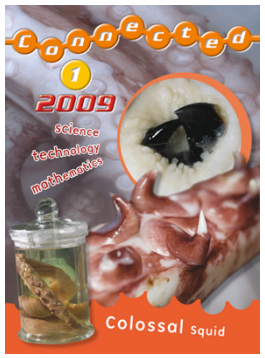
It was the Connected 1, 2009, all about the colossal squid that was dissected and then put on display at Te Papa Museum in Wellington. We often talk about how to integrate science into our reading programme and as I read through the article I thought there were a few good instances to develop that science lens with students…
Basically the key is to think about how I can develop the science capabilities with students whilst they read the article. It might be a good article to show how scientists investigate or how they notice carefully. It could be that you might focus on a chart or a diagram for students to critique: what do you think of this diagram? Does it have enough information? Does it need more? Who do you think the audience is for this representation?

There’s a good diagram on the front page that seems to break all the rules (that I like anyway!) for diagrams –does this matter? How do scientists know all the facts about squid? Make a list and try to figure out how they might have figured out all this information…
The squid's beak; Te Papa website
I was also curious about the whole ‘defrosting the squid’ episode. Scientists first froze a block of ice to check how long it would take to thaw. Mind you, I’m not sure you can freeze a block of ice… perhaps they mean water… In terms of investigating, what might have happened if the scientists hadn’t tested first? What else might they have had to investigate before carrying something out? One that springs to mind is the preserving liquid for the squid at Te Papa.
Finally there’s the vocab –what verbs are there that are more likely to be used in science and what do they mean? And the processes happening as well!
The squid's eye; Te Papa website
So just a quick blog today –I was just excited after I had read the Connected seeing all the lovely science. Yes, teachers do need to do a bit of the heavy work to be deliberate about the science (children understanding how science itself works) but from this kind of work, children will have a greater understanding.

Keep on sciencing!

Thursday, 31 May 2018

Year 7 and 8 students engaging with science

I'd like to continue with sharing some ideas for our year 7 and 8 students. I do think that you can grab these for our younger children too though so do read on!
The last capability is "Engaged with Science":
http://scienceonline.tki.org.nz/Science-capabilities-for-citizenship/Introducing-five-science-capabilities/Engage-with-science

This is sort of the capability that will hopefully draw all the other capabilities together. Through developing Gather and Interpret Data, Use Evidence, Critique Evidence and Interpret Representations capabilities, students may be even more ready to engage with science. This is the one where students grab hold of science issues and can discuss these, perhaps even taking action. I like the thought that this engaging may be as simple as visiting the museum, or perhaps taking home the experiment from school to try with the whaanau! This week, a teacher shared how one of her students rushed up to her in the morning, sharing about how he had seen his shadow when he got off the bus -we had been exploring shadows the day before!
I'd also like to think that we can discuss other issues too that may not seem 'science'-based but certainly have an element of science that can be discussed. Of course, off the top of my head, I can only think of ones that are science issues (naturally!), but students may come in to chat about something they've heard on the news and the class could look at through a science lens. 
We need to work hard to develop the kaupapa in the classroom so that discussions can be had, different views can be shared, and we can disagree! Sometimes, simply because science says 'yes', it might not mean it's right -chlorinating the water could be one of those discussions. Yes, dentists say it is right to chlorinate the water and have informal data showing that there are more fillings in areas where they don't, but actually I really don't want extra 'stuff' in my water! 
Having a discussion can be quite difficult, especially if you like to be the chairperson! Creating a conversation so it's the tamariki talking between themselves is a great goal to move towards.
This week, we've had the Mycoplasma bovis disease in the papers a lot and some of you may be teaching students who live on farms. When I'm reading through the papers, I can see there are opportunities to discuss articles with the students (perhaps a great reading activity?) -what do they think? Can they back up their arguments scientifically? How do the papers present the information? Is it scientific (i.e 67% rather than 'lots')? Is it emotive? What is the language used? Some students may come to school talking about the anger and emotions farmers are feeling at the moment and it could be a challenge separating this from just thinking scientifically. However, I do feel that we need to be aware of these other aspects of this disease hitting the farms. Although we can talk about this from a scientific point of view, what other views are there to take into account?
"Wicked Problems" is a term that could well describe this and there are some good examples out there, as well as a book called Key Competencies for the Future from NZCER that I really recommend -a good read and well thought out for teachers. An example is feeding children lunches at school -if we do, it may cost schools money and parents are 'getting away with it', and if we don't, children are hungry, struggle to learn and can have behaviour issues... There isn't 'a' solution that will please everyone!
Another interesting issue is the current reversal for houses where methamphetamine has been smoked. Recently, Professor Sir Peter Gluckman wrote a report that our testing for meth use in houses was too severe and based this on scientific information... so what was used in the first place? And some disagree with the findings -that it isn't healthy and no new information has been used. 
For both of these current NZ issues, there's lots of science happening: vocabulary, scientists at work, data being analysed and this directly affecting society. The essence statement in the NZ Curriculum says: 

 and certainly this is the case with these two situations affecting people. 

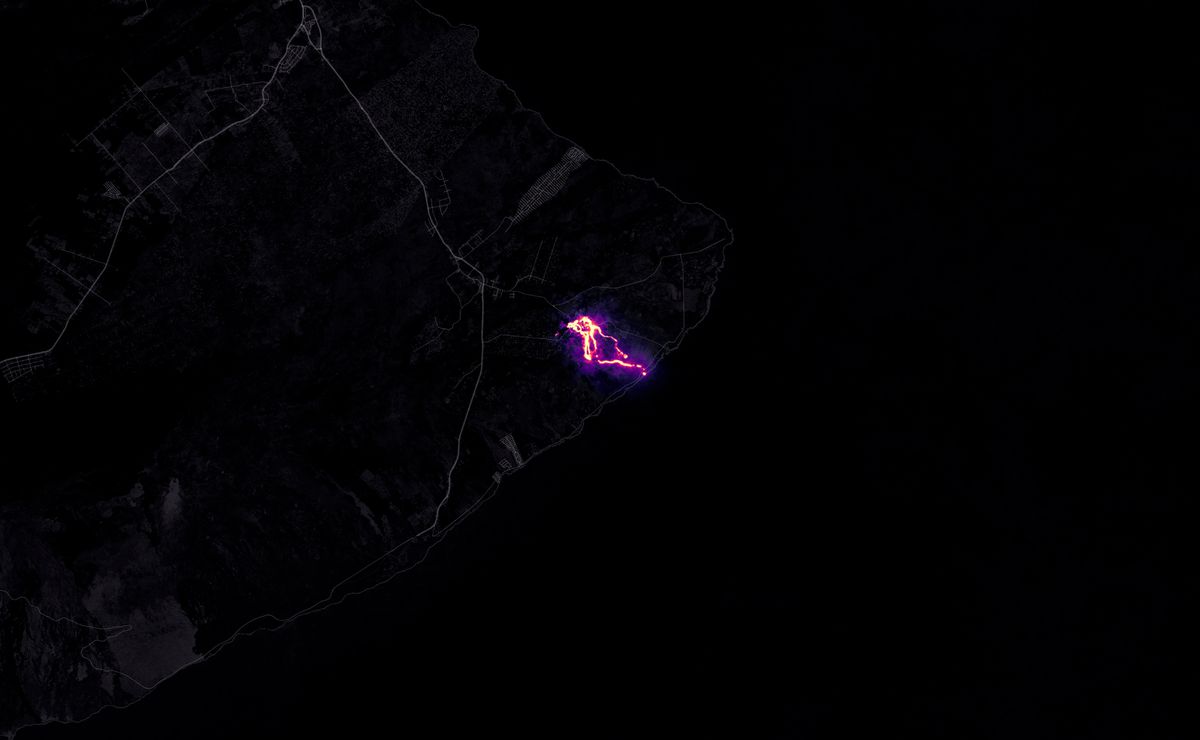
Finally, I just want to remind you of other news that shows science playing a significant role, that shows scientists at work as well as specialist vocabulary in particular topics: the Hawaii eruptions! I'm certain lots of children would be interested in what's happening over there and could make for some interesting reading topics. 
And I wanted the chance to share some interesting photos I saw yesterday. I wonder what children would make of them? Good for "I notice, I think, I wonder"!
From mashable.com, satellite images during the day and night of the eruptions.
Anyway, I hope this has given you some ideas for science, discussions in the morning, or reading and writing time! As always, do share your thoughts!

Keep on sciencing!
Paul

Monday, 21 May 2018

Level Four Science for our Year 7 and 8 children

In my travels around the countryside (and always keen to head to new places so do ask!), one thing that strikes me is how we teach our Year 7 and 8 students. Quite often the question pops up "How do our Year 8s do in science when they get to college?" and unfortunately the answer can be "quite poorly". Students may be unfamiliar with the subject altogether, or not understand the vocabulary, or have little context knowledge, so feel quite insecure when heading into the classroom. In terms of the latter, I'm not sure that we should have our Y7/8 curriculum driven by knowledge needs of Y9 classrooms but even children going in knowing 'some stuff' may make them feel more confident in the attaining of some more!

The NZC nature of science strands and the context strands are quite general. Have a look and not only will you see a lot of it is the same as for Level 3, but also the verbs are not specific: explore, describe, appreciate, identify... (In fact, that could make an interesting activity for the staff: underline all the verbs): so what do these look like? How much "appreciate" is needed to be at Level 4? When will I know that students can "describe" at Level 4 rather than Level 3? I think these are valid questions but may also be quite different from school to school.

The other side of this is the how we teach science? How do we know we're teaching at a Level 4? I have a sneaking suspicion that a lot of our teaching programmes may say we're teaching Level 4 but actually it's more likely Level 3 or even 2. Of course, if students haven't explored the topic before, they should start at an earlier level, but I think even when they have, we still tend to teach a hands-on approach that probably reflects lower level classrooms. The other issue is us! What if we don't really know enough science to teach Level 4? Or we don't really know what it should look like?
NZCER STwE Assessments
In answer to the second question, there are two options. We can start with the Science Thinking with Evidence assessments from NZCER. Besides actually finding out what level the students are working at in terms of the nature of science (the science capabilities are used for the Y4-6 tests), we can also look at the content of the tests. How are questions asked? What verbs are used? What are children expected to do? I think you might be surprised at the depth! Some questions may have contexts that if you knew about them would give you more confidence in answering them, but you can certainly answer them without knowing anything! And that's the key! Are we teaching our children the science skills and attitudes so that they can work in any context well?

The second option is the Assessment Resource Bank. I've been having a wander through today and have found lots of good examples of data gathering using statistics and measurement. Although the advanced search uses the nature of science strands, you can add key search words that are science capability based. Besides having tasks that will straight away show you how children could be thinking and how they are working at Level 4 with standardised comparisons to help you, I think there are some really good lessons that could be adapted from the assessments! Start with a discussion and 'the problem' (that just happens to coincide with the exercise!) and then let the students investigate, whilst we all critique our findings and research methods and then leave some space to investigate our wonderings that might result from our work.
Although these are assessments, I think they are fantastic starters for us teachers to build series of lessons around and they give us some ideas around how we perhaps should be teaching science at this Level 4. Pull out your Progressions in reading, writing and maths -if this is what we expect at Level 4, then we should be expecting the same for our science! I was going to put some links here -I like the Runny Honey, Propoerties of five drinks, Keeping drinks warm, but the list goes on (I have 11 tabs open at the moment!). With the arb site, you can save activities to your folders for later and you can make as many folders as you like!  

As always, I value your questions and comments (and requests for PLD!) and do check out my facebook page "science happening nz'.

Keep sciencing on!
Paul

Links: https://arbs.nzcer.org.nz/
http://www.nzcer.org.nz/tests/science-thinking-evidence
https://www.facebook.com/sciencehappeningnz/

Sunday, 6 May 2018

Integrating Science

We talk a lot about the crowded curriculum and trying to squeeze in all the essential learning areas and one way to try and get a good coverage is the integrated topic... Let's do a unit on "the local beach" and we can then have social sciences (history and geography), science (sustainability, living world), art (sketching, painting, sculptures) as well as tikanga, literacy and maths, etc...  Then schools get facilitators (like me!) coming along and talking about how students are arriving at colleges not understanding big ideas about science, or even that they have ever done science! We encourage schools to ensure that students know they're doing science and that in science, we have a particular way of sharing ideas, carrying out investigations and communicating with others.

Although this would seem like two completely different ideas, I believe that we can have a lovely integrated topic and keep the science focus (or health or social sciences...) as well. I love the idea of authentic contexts and I think it enables students with all their different learning styles and passions to be engaged and enthusiastic -a six week science unit on "birds of the beach" will certainly interest me but may not be so interesting to everyone else! A six week unit where students are doing some science: counting the birds, observing their behaviour, investigating them further at school using the internet and books and then confirming back at the beach; as well as art: painting landscapes, the waves or whatever arty people like to do (!) may engage all students.

Particularly in the Year 5 to 8 classes, reading and writing may disappear and those literacy spaces become an area for authentic contexts where students are still learning those skills but within, for example, the topic of beaches:

  • Visual Language: critiquing the warning signs at the beach, 
  • Writing: describing the life of the beach both poetically and scientifically (they are different!), poetry, summarising data gathered,
  • Reading: DoC websites, local resources (might be newspaper articles, websites or pamphlets) and school journals
I'm sure you can come up with many more ideas. Even within these times, I might still be reminding students that, if it is summarising data, we need to be careful with the language we use since we are writing a piece that reflects scientific thinking or communicating. If we're debating, it might have a bit of science writing and some argumentative themes too. If I am writing something poetic, I might remind students that in this context, we have more leeway, and we can use metaphors and adjectives as well as making sure that we are eliciting an emotional response in our readers. The same goes with reading... If it's an article, it should have a particular way of communicating ideas with the way it is written and the words used. I like to use the local papers and cut out letters and articles for students to read and critique.

I hope as you have read through this post, you can see the science capabilities or the nature of science shining through... By ensuring that I'm keeping that science label prominent, I'm hoping that students moving on to high school will understand how we investigate in science, how we communicate, and how we critique. Students are also aware that science is much more that "blowing things up" (and yes, I even got that description again last week!). They will be developing that science lens right alongside other lenses.

I'd also like to share about how I'd have the Key Competencies and Values right at the top of my planning running the whole unit but I think I'll leave that for another day!

I hope this helps -it would be a great topic to discuss in a staff meeting and I would have the Essence Statements in the NZC (p. 17) open to ensure that curriculum areas don't get diluted. It's something that I constantly wrestled with when I was teaching -I often wrestled with reading programmes that were completely disconnected with whatever topic I was currently playing with.

Have a great week, feel free to comment below!
Paul

Thursday, 26 April 2018

Writing lesson sequences

With my supporting schools in science education, I tend to be asked to do some modelling of science teaching and this has progressed lately to teaching a sequence of lessons to explore the whole 'where to next' thinking.
Of course this can be quite difficult, particularly if the goal of science is to get students doing the science and not so much following a prescribed unit plan or lesson sequence. So how do you plan to have enough structure to show the class is actually doing science, leave enough space for the students to investigate, as well as ensure that the nature of science or the science capabilities are being developed and context strand concepts are introduced too?!?
Although my planning for modelling is a lot more detailed as I'm wanting to share what I'm thinking and how I hope to facilitate learning, the gist is fairly much the same with however I'm teaching. I thought I'd share my process and remind those schools I've worked with that you probably have some examples of this in a shared drive somewhere!
I start with my Big Idea. This will reflect a conversation with the teacher about both a context, in the above photo, Chemical Reactions, and a focus on developing some aspect of the science capabilities. The above plan is about developing the idea that in science, explanations will come from our noticing and gathering data. I might be focusing on how we gather data or critiquing or some general idea about the lens of science -how we think, communicate and act 'scientifically'. For this planning, the teacher asked me to integrate the school theme of 'conflict' as well. 
Next, I highlight the capabilities I'll be developing as part of the science teaching. I usually highlight the NZC's nature of science strand AOs too but for teachers I suggest they choose either the NOS or capabilities as they are both about the same thing. For me these are the important bits! This is the stuff that I'll be thinking about, assessing or evaluating, and demonstrating. Regardless of which way student investigations go, I'm reasonably certain that I can monitor how the capabilities are being shown and developed further. I would use my OTJs or rubric for assessment or however you want to do it (!) as part of my reporting back to parents -check earlier posts for further thinking about assessment.
Next the context strand, in this case it's the Material World: observing, describing and comparing the changes when materials are mixed. Because I like to have a robust context that is developing good scientific thinking, I'll investigate a bit further for me. I might use some of the ideas and knowledge with the children, it just depends what level and where I'm hoping to head. I might jot down some knowledge, vocabulary and perhaps some student misconceptions that I might have come across before. Usually these are geared more towards the knowledge ideas, for example that junior students may think of 'dissolving' as 'disappearing' but might include some misconceptions around, for example, observing -that students struggle to notice change over longer periods of time. 
At Omokoroa, the good ol' jellyfish warm up!
And then I'll put down a rough lesson sequence, linking to websites where I've found ideas and activities but also with opportunities for students to investigate further, to pose questions, and look for possible answers. I will have a sequence here but I am also open to student agency where I might need to adapt the lessons, add something to counter some concerns I might have, or include a new direction the children have taken off in. If I really want my lessons to happen, I can still do them -after all, I like to let children investigate their ideas but there is also space for teacher directed lessons!
Finally, I add integration with literacy and maths, areas where I may be able to include tikanga Maaori, and how I might assess the unit, usually with some indicators or a rubric. 
If I was a class teacher, I'd probably add an evaluation too, just in case I want to have a go at the lessons again, so I'll want to know what went well, what didn't, etc.

I hope this helps with your own planning! As always, add a comment below, and check out our new facebook page (science happening NZ)!

Keep on sciencing
Paul

Thursday, 12 April 2018

Does coffee cool down faster than tea?

Kia ora koutou
Today I was playing with a supposition that I've had for a wee while, so I carried out a wee experiment with Anne looking on (she was in the midst of trying to eat lunch!). As we chatted and I gathered data, we ended up realising this could be quite an interesting one to share, about the process of our thinking, etc.
I had always thought that when I made myself a cup of tea (regular tea with milk), it always stayed hotter than if I made myself a jarrah coffee that doesn't have milk). These were my noticings, my observations. So today, I set up an experiment with a mug of hot water (for the pre-mix coffee) and a mug of hot water with some milk in (representing the tea). Now, I didn't write this up using a scientific method, this was the exploration period or, as Anne called it, the play. In my PLD sessions with teachers, I often talk about the benefit of letting students do the same experiment twice. There may be a few differences but the first session is the chance for students to have an explore, ask questions, and develop some thinking whilst the second session will build on this and perhaps have a more scientific bent, for example, we better measure the amount of milk carefully or we need to record how many stirs of the spoon.
The initial experiment. The feijoa is just an innocent bystander in all this. 
I recorded the data, a little haphazardly, and then we talked about what I had found out, whether what we were thinking was happening and where to from here. I found that as I did the 'play', I was starting to think more carefully about measuring, about other ideas to try out and what to do with the data. I also found out that my prediction that the hot water and milk mix would cool down at a slower rate wasn't really being reflected in my initial data. As more people tried to eat lunch (with one very concerned that her coffee would end up being experimented on), they started posing questions and wonderings too -the main one being about the milk and it's fat content, with the fat possibly retaining the heat, and how could we check that? We were discussing why the data might be reflecting certain results. Noone used google, we were just chatting about what might be happening.
Version Two!

I tried the experiment again with actual tea and jarrah coffee (and yes, I'm not sure why I didn't start with that either!) and again measured the temperatures of the two liquids. I tried to make them the same way I normally would and that threw up questions -you stir the coffee a lot more than the tea and did you add the same amount of milk to the first cup?
At the end, we talked about the data I had gathered and critiqued some of the recordings. Had I made sure it was exactly every 30 seconds? No, but reasonably close (and is that good enough?). How will you show the data -bar graph or line graph? Bar graph but you could use a line graph as it is measuring time... (which I ended up doing as well!)
 Because I started thinking about this as a science experiment and an opportunity to get critiquing happening, I decided to leave it a little messy... Is the line graph clear enough? Does it need more information? Do children know how to read a line graph and summarise what they can see? Do they understand the function of all the parts of the graph -the table, axis, etc... and now we have maths happening!
Wrapping this all up, we discovered that our initial results seemed to suggest that tea was getting colder faster and that it was all in my head. You can see I'm using tentative language as we haven't tried all the variables -was it the amount of stirring, the type of milk, the coffee powder itself, etc. We needed to have this preliminary activity to start our thinking, to begin to consider the variables at play and develop more wonderings from this. I like the idea of sharing the data with students and perhaps the graph and getting them to critique what I had done -was it scientific enough? Does it matter about the anomalies? From here, I might choose to experiment with a bit more purpose and in a more scientific way, ensuring that the procedure could be replicated by others.
This science idea came from my own wonderings, which I'm hoping we all have... why does tea slop in the cup when I'm walking along or the suitcase wheel around madly when I'm rushing to the terminal at the airport...
What are your wonderings?

Have a great term break, and see some of you next term!

PS, I'm on Facebook... look for science happening NZ and you should find me... I hope! If not, sing out because it means I've done something wrong!