 |
| Learning Media |
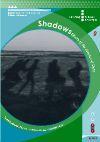
The Building Science Concepts resource has a few books with more than one context strand. In fact #9 Shadows (sorry for the quality of the photo) covers three! I've always thought that the NZC has lots and lots of ideas for each strand. The Physical World strand at Levels 3 and 4 (in this case the AOs are the same) has this to say:
 |
| New Zealand Curriculum |
Perhaps a teacher could develop a unit with the Physical World concept of heat alongside the Material World concept of insulation (pinched that idea from the BSCs!) -what keeps heat in?, how does heat 'work', what makes things lose their heat?, and most importantly, why is my cup of tea always cold by the time I remember it! I'm wondering if you could squeeze some Technology into this too...
Anyway the reason for the blog was to think about 'gathering evidence'. Some schools are in the midst of report writing so I thought a little bit on the idea of assessment might be helpful. If we are deliberate about wanting to develop the students' thinking and capabilities in science, we need to know what they know, as well as where we think they might need to be eg at Level 3. Unless the unit of 'Heat' is taught every year, the assessments will probably be summative: Paul knows/does not know about heat... If instead we look at the Nature of Science or the science capabilities, we can probably be more formative: Paul is able to represent his ideas in a drawing clearly showing that he is aware that heat transfers. He is beginning to use scientific vocabulary to describe his diagram to the teacher... Although this looks like a context strand assessment, I'm actually assessing this delightful little student's "Communicating in Science" (NoS) and "Interpret Representations" (science capability) ability through the context of heat (Physical World). From this I can see Paul is starting to use this capability and as he's Level 1, I'm quite pleased with his progress! Where to next might be thinking about getting Paul to show movement or change in his diagrams/pictures, or perhaps critiquing other students' work. I might like to move him from "beginning to" to "using" scientific vocabulary... And as he gets older, he might be able to record these ideas on the paper with more confidence...
 |
| Me at Level 1! |
At Year 7/8 I might expect students to share more information, use arrows, represent the transfer of heat, use scientific vocabulary and write in the correct genre for a diagram.
In terms of gathering evidence to show how Paul is going, I could look through his science journal where he has scribbled ideas, drawn diagrams, posed and answered questions, planned investigations, gathered data, interpreted data, formulated/suggested/written explanations, etc... It might be through a video that his group has put together sharing their investigation and what they think happened or a chart or a diagram... It could be through something quite wildly different. I wasn't joking about children doing an interpretive dance for dissolving sugar in water! I once watched a video (and I wish I could find it now to share) where children were showing what happens to your shadow as the sun moves through the sky (and yes, I know the sun doesn't move, it's us!) with a child being the sun, a child standing and another child being the shadow. One group clearly showed that, as the sun is higher in the sky, the shadows are shorter and always exactly opposite wherever the sun is in the sky. It might look like a straight context assessment but really, this is ticking off the NoS too!
For me, I'm still working through how much knowledge is needed or necessary and whether we should assess this part of our science curriculum. I do think it's important as knowing 'stuff' may help us want to learn more (and practice the capabilities more!) but I'm just not sure how much is 'enough' and how to ensure the children are developing this knowledge with my support and not me simply dumping it on them!
Anyway, that's enough for a quick share on gathering evidence... I'd love to hear how you are trying out different ways to find out where the children are at... Oh, and we haven't even started on progressions :-)
Keep sciencing on...
Paul


